Children.....An Agenda of Urgency


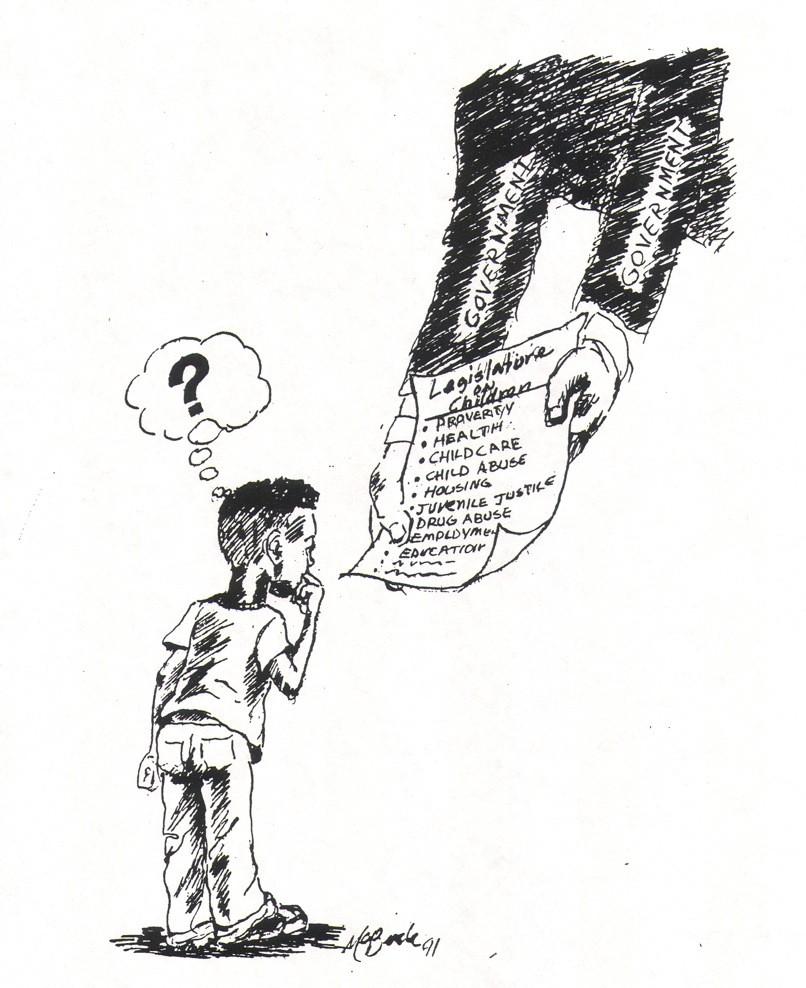
33% of black children live in poverty..... 35% of black children live with two married parents compared to 83% of Asian children...... 77% of white children, and 65% of Hispanic children..... A Black baby is born uninsured every five minutes. One out of every seven babies born uninsured is Black......Black infants are more than twice as likely as White infants to die before their first birthday.....One in three Black children is poor.....Chicago loses more black kids than soldiers in Iraq to gun violence.....7.0% of Black children (767,200 children) had a parent in prison.....70 percent of African American children are born to unmarried mothers.....61% of black children "6.5 million"live in low-income families......Black children are 9 times more likely than White children to have a parent in prison....69% of Black children cannot read in the 4th grade.....Gunfire killed 3,365 children and teens in 1999 "more than 38 percent were Black youth.....Homicide is the leading cause of death among Black males ages 15 to 24.....Firearm death rate for Black males 15-19 is four times that of White males of the same age.....Nationally, Black youths under age 18 represent 15 percent of the juvenile population but make up 26 percent of juvenile arrests.....One of every two Black children lives in poverty.....More than half of Black children live in single-parent homes.....In some inner-city schools the drop out rate climbs higher than 75 percent.....A Black infant born in the U.S. is twice as likely to die before his or her first birthday

The Child Watch Project

Signs That A Child May Need Help
  • Afraid and/or avoids certain places and/or people.
  • Physically overly-aggressive Strikes out at others.
  • Has trouble making friends.
  • Has trouble with bed-wetting.
  • Has trouble in school...can't focus on school work .
  • Is often truant from school.
  • Seems tired and sleeps often in school .
  • Has trouble controlling his/her impulses.
  • Has poor conflict resolution skills.
  • Is violent and/or verbally abusive to family & friends.
  • Constantly cries or whines without cause.
  • Is overt, quiet and withdraws from other people.


The silent victims of crime


The "Child Watch Project" is designed to serve children and their families who are experiencing emotional, psychological and behavior difficulties as a result of being exposed, impacted or affected by a criminal act, an act of violence such as assault, physical abuse, sexual abuse, emotional abuse, domestic violence and homicide. Many children who are victims of crime, abuse and neglect become casualties in our Foster Care and Juvenile Justice systems if prevention and treatment services are not provided to them and their families. Child Watch provides: crisis intervention, information and referral, parent and child advocacy support, training, counseling, individualized service and safety plans. Common feelings felt by these children are: Fear, Anger, Hopelessness, Guilt, Shame, Anxiety, Stress, Aggressiveness and Helplessness.


How will the Child Watch program help Children and youth?


  • Empower parents to stand up for their children.
  • Increase parent's knowledge of legal and public Policy options available to protect their children.
  • Provide parents with knowledge of community Resources to assist them in protecting their children.
  • Reduce the potential of children being a crime victim.
  • Decrease anxiety, fear, hopelessness and anger of children and youth crime victims.
  • Increase children's ability to identify responsible Adults they can trust.
  • Increase parent's ability to recognize symptoms and indicators of children and youth crime victims.
For additional information on this program
please call (615) 366-5530. The Child Watch Project is funded under an agreement with the State of Tennessee, Department of Finance and Administration, Office of Criminal Justice Programs and is supported by Award # Z0009935501 awarded by the Bureau of Justice Assistance, Office of Justice Programs, USDOJ. The opinions, findings, conclusions or recommendations contained within this document are those of the author and do not necessarily reflect the views of The Department of Justice.